Tuesday, April 30, 2013
Catching Up with Books
Thursday, October 18, 2012
31 Before 31: A Year in Review
Monday, September 24, 2012
Books, Reviewed
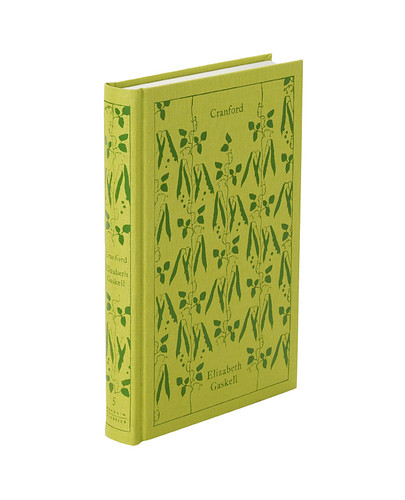
The other recent read that was a true surprise was one I picked from my Penguin Classics, which I now have the complete collection of - yay! The book was one of only a couple I had not heard of before, so it was high time I figured out what it was about. The book is Cranford by Elizabeth Gaskell and, my goodness, is it a riot. This book is not a novel so much as a series of vignettes revolving around the lives of a group of older ladies in Cranford, a town with no men, as Gaskell writes. These women, widows or unmarried daughters of the town's "aristocracy" have, over their 60+ years, created an unwritten rule book of how long a neighborly visit should last (15 minutes); that a dress in a fashion 30 years ago is acceptable, but the latest fashion in hat must be worn (at least they are led to believe they wear the latest hat trend); and that it may not be reasonable, but must not be spoken of, if one of the ladies decides to make a flannel jacket for her cow after it loses its hair. These ladies, in other words, are simply ridiculous, but they do it with the sweetest of intentions...mostly. It may take reading a sentence twice to understand the humor, but Gaskell ensures the pages are rife with subtle, and not so subtle, moments of delight. Aaron must have thought me mad with my random laughter throughout this book. If a gal wants to read something around Charles Dickens' time, with something like Jane Austen's more hilarious characters living next door to one another, this is an excellent book.
Tuesday, January 31, 2012
2011, in review
- I got married to Mr. Aaron-man, who constantly amazes me with how creatively loving a person can be. And where one's love is located. The metatarsal was the latest location of his love for me.
- I surpassed my goal of reading 26 books in a year by two books.
- Some dear friends and family passed away. Tim, Amy, and Nanny are dearly missed.
- Favorite dessert I did not make: Honey and Sea Salt Pie at Piebird
- Favorite dessert I made and can remember: Cookies and Cream Ice Cream. It is AB's vanilla ice cream with a box (yes, a box) of crunched Oreos
- Favorite meal out: Tie between the Fried Shrimp Gnocchi at Top of the Hill and Chicken Saltimobocca at Tupelo Honey Cafe. I totally won in ordering food while on the honeymoon.
- Favorite meal I made: Corn and Cheese Chowder...ooh, and Panko-crusted Salmon
- Least favorite meal I made: Any time I made chicken noodle soup. I am beginning to think I just do not like chicken noodle soup.
- Favorite book I read: Matterhorn, without a doubt. Even now when I am looking at the shelves for the next book to read, I pause on this one, tempting myself to read it again.
- Least favorite book I read: Where Men Win Glory by Jon Krakauer. This book, by an author whose work I love, made me so angry. Krakauer let his personal opinions and beliefs cloud the story and Pat Tillman kind of seemed like a jerk.
- Favorite food find: Gyoza sauce from Trader Joe's
- Product obsessions: Aveeno lotion and Mighty Leaf Tropical Green Tea
- Kitchen tool addition of the year: My blender...and my mandolin...and my salad spinner...wedding presents are the best!
- Household addition: Aaron (duh!)...and our awesome bed of awesomeness, the Tempurpedic.
- I have too many... Dish towels, wooden spoons, and blankets
- I do not have enough... Things to wear, comfy reading places
- Favorite spot: Caribou Coffee with Aaron after geocaching
- Cutest moment: Haydie-bug flirting with Aaron over Thanksgiving. (It may have been my BIL being the flower girl at the wedding when Haydie-bug got stage fright, but I was waiting in the wings, and thus unable to see.)
- Least favorite place: Schmacy's housewares department - over and over again
There are probably large chunks of my 2011 year I am missing here, but I think I hit most of the high notes. 2012 is going to be another big year of big changes - graduations, new jobs, maybe new cities, and a whole lot of "who knows" thrown in!
Wednesday, September 7, 2011
Matterhorn: A Novel of the Vietnam War
Without question, Matterhorn is the best book I have read all year. And I am debating whether it beats out last year’s favorite East of Eden. Focused on Second Lt. Mellas and Bravo Company’s actions on and around a small Vietnamese mountain named Matterhorn during the Vietnam War, Karl Marlantes unceremoniously drops the reader into the fray with Mellas as his eyes are opened to what war, politics, home, and the future are in the face of a war with no end in sight.
Matterhorn is a crushingly painful and painfully raw book to read. Good men die, bad men make wise decisions, and the ravages of war show no care as to who it takes or how. Beyond the tension of war itself, there are tensions between race, class, and rank. There were times in the book I became so angry at some of the enlisted men and officers for decisions they made. In one instance, a commanding officer volunteered Bravo to extend their mission, knowing full well they had no food and were low on ammo and would not get more of either in the foreseeable future.
I do not have detailed knowledge of the Vietnam War. It is difficult for me to discern if any of the scenarios Marlantes lays out is absurd or not, but they seem all a little too real from my point of view. The progression of the book is so seamless; I did not realize the subtle changes in perspective until well into it. As I read the book, much like Mellas, I began understanding how things worked and why, and feel the same swing from hope to hopelessness with Bravo Company. Marlantes knows when to gradually part the curtain to some awful truth, and when to rip the bandage off in the most painful fashion.
This is a book that I will continue thinking about far after I finish it. And it is one, too, that will remain on my bookshelf, ready to be reread, for many years to come.
Tuesday, July 12, 2011
The Great Exchange
Wednesday, May 25, 2011
I See Dead People's Books
Tuesday, December 21, 2010
A Year of Books in Review
Monday, December 13, 2010
Books You Can Wear

Friday, December 3, 2010
Look, Look a Nook
For some time over the summer and early fall, Barnes & Noble was putting out 10 classic books in electronic format weekly - for free! Once I learned of this, I began purchasing them, which led to a virtual library of about 90 classic books...before I even had something to read the e-books on. Yes, it is hard for me to pass up free books. In Aaron's gift to me, he included a print out from our local library explaining where and how to check out e-books.
This sheet came in handy when I wanted to borrow an ebook. However, being that I have a Mac and people still do not realize how many people have Macs and therefore why it is a good idea to have software that works on a Mac, it was not that easy. The program I needed to get the ebook on my Nook was a pain in the rear. Several support forums later and I got my book! (This is not the Nook's fault in any way; it is the Adobe application I needed to get the book from the library, to my Mac to my Nook that was the issue.)
I decided to read The Passage by Justin Cronin as my first official e-book. It looked like a good book that would be enjoyable to read on paper and an excellent "fun read" to test out how the Nook works as a reader. All in all, I am impressed with it and I only saw a few minor things that could slow the reading experience. The hardest part is that if you want to refer back a few pages to earlier text, on the Nook you cannot just skip back to the desired page. You have to push the back button until you get there, which can be mildly annoying. However, as I did with a drawing in The Passage, you can easily bookmark pages that are kept in a list for quick referral.
Friday, October 1, 2010
An Obsession Confession
Thursday, September 9, 2010
Descriptive Jealousy
Thursday, August 5, 2010
GANC: My Thoughts
I am not sure if this was a subconscious effort on my part or there are more writers here or what, but most of my novels were written by an author from or a book about the South. Having never lived in the North, or really even visited there, I can only assume the North is a dull place with no novel-worthy conflict and a lack of imagination. I kid, I kid! To make a generalization, Southerners are a story-telling people; and slavery, plantations, Civil War, and segregation lend themselves easily to stories and fictional exploration of social constructs. Much of the large societal action in the North occurred in the 1700s and early 1800s, and from what I could find there are not a lot of books from around that time, at least not widely known ones. It is strange, in some ways you can see the shift of the writer concentrate from early America and North to established country and South as you move from the likes of Melville, Hawthorne, James Fennimore Cooper and Poe to Twain, Faulkner, Harper Lee, Capote, and Flannery O'Connor.
Tuesday, July 6, 2010
GANC: The Almost Reads
1830s
The Book of Mormon - Talk about starting off the list with a bang, huh? It is clear that this book has a large and ever-increasing footprint in America. It is somewhat controversial that it is on my list as a fictional novel. I do not know enough about The Book of Mormon to declare what it is or is not (myth, tall tale, blasphemy, fiction), but I believe it is not a writing inspired or written by God, Jesus, any of His angels, the Holy Spirit, or any of the previous speaking through the mouth and writings of Joseph Smith. It is a work written by a man, from the mind of a man, with no heavenly assistance whatsoever.
1840s
The Deerslayer, by James Fenimore Cooper - Having read The Last of the Mohicans, and wanting to have a book from the early to mid-19th century, this was a natural choice. And I actually started to read it one month for the challenge. However, I found it difficult to get into and not something I was excited to read, so I abandoned it for another book.
1860s
The Marble Faun, by Nathaniel Hawthorne - I love reading Hawthorne, so when I looked his works up to find a book to read for GANC, I found that I had exhausted all of his novels set in America. This one was set in Italy, so it did not rank high on my list of novels to read that could be great American ones.
1880s
The Portrait of a Lady, by Henry James
The Prince and the Pauper, by Mark Twain - I had already read his two America-centric books, Tom Sawyer and Huckleberry Finn, so this one also fell on the list due to it not being set in the US.
A Connecticut Yankee in King Arthur's Court, by Mark Twain
1890s
The Awakening, by Kate Chopin
1920s
Babbit, by Sinclair Lewis - I was supposed to read this book in US History 2, but failed to finish it. Since then I have picked it up from time to time, only to be lured away by a more indulgent novel. This book was a victim of too many good books in one decade.
1930s
Tropic of Cancer, by Henry Miller - Victim of decade
The Grapes of Wrath, by John Steinbeck - This too was a victim of decade. Let me put it plainly, I misused the 1930s. Thankfully, Aaron owns this book and I will probably read it before he finishes it.
1940s
Cannery Row, by John Steinbeck - Poor Steinbeck. So many good books over so many decades, and I could not read them all.
Other Voices, Other Rooms, by Truman Capote - I have only read In Cold Blood and was interested to see how his fiction played out.
The Naked and the Dead, by Norman Mailer - By the time I realized I was missing this author, it was too late. The 1940s were already spoken for.
1950s
Invisible Man, by Ralph Ellison
Wise Blood, by Flannery O'Connor
The Adventures of Augie March, by Saul Bellow - I wanted to read this book so badly, but it simply was not in the cards. Had I not taken half a month to decide not to read Invisible Man, I could have tried to read this. Oh well. I think Aaron has a copy, so I will add it to my pile of books to read.
Atlas Shrugged, by Ayn Rand
On the Road, by Jack Kerouac
1960s
The Moviegoer, by Walker Percy
V., by Thomas Pynchon
The Crying of Lot 49, by Thomas Pynchon
Slaughterhouse-Five, by Kurt Vonnegut - I know! How did I make it through high school and college, while having this book on my list throughout, and still not read it!? I am happy with the two novels I did read from the 60s, so no regrets here. Just another book to keep on my list. Lock me away for a year and I may be able to finish half of this list I have.
1980s
The Executioner's Song, by Norman Mailer - This is a book that has a foot in both non-fiction and fiction, depending on where you look. A little like In Cold Blood - fictionalized account of a true crime
The House on Mango Street, by Sandra Cisneros
Blood Meridian, by Cormac McCarthy - My uncle Tim recommended this book to me and said it was one of the greatest books of the 20th century. To place some perspective on this, Tim is an English professor at St. Edward's University, so his comment is not without merit.
A Prayer for Owen Meany, by John Irving - Suggested to me by a friend. The '80s and beyond is a little too fresh and new for me to feel comfortable declaring a book that could be younger than me as a great American novel. I like a good 30 or 40 year buffer to see what books are flashes in a pan and which are here to stay.
The Joy Luck Club, by Amy Tan
1990s
The Things They Carried, by Tim O'Brien
Bud, Not Buddy, by Christopher Paul Curtis
2000s
The Amazing Adventures of Kavalier & Clay, by Michael Chabon
Some books that were considered for my "break the rules" month:
Dr. Seuss - various books
Emily Dickinson's poetry
Calvin & Hobbes
Books I have already read. Which brings us to...
Books I have read that I consider great American novels: (in absolutely no order)
The Wizard of Oz- Frank L. Baum
The Scarlet Letter- Nathaniel Hawthorne
The House of Seven Gables - Nathaniel Hawthorne
To Kill a Mockingbird - Harper Lee
Little Women - Louisa May Alcott
Fahrenheit 451 - Ray Bradbury
The Adventures of Huckleberry Finn - Mark Twain
Call of the Wild - Jack London
O. Henry's short stories
Uncle Tom's Cabin - Harriet Beecher Stowe
The Red Badge of Courage - Stephen Crane
Washington Irving's short stories
Adventures of Tom Sawyer - Mark Twain
All the King's Men - Robert Penn Warren
The Hidden Hand - E.D.E.N. Southworth (Never heard of this book? Go ahead and add it to your book list. It is funny, light, adventure-filled, fantastical and melodramatic.)
So there you are. Are there any books I should have had on my list that are glaring omissions? Should I have thrown in some non-fiction to pick from for my break the rules month? How about a book written by a non-American author? Feel free to add your suggestions to my list via comments. I look forward to see what books I missed!
Sunday, July 4, 2010
GANC: Good Ol' Charlie Brown
Charlie Brown, the protagonist of the strip, is presented as someone who is faithful to his friends through thick and thin. He may be wishy-washy, but never does he fail Lucy, Linus, Peppermint Patty, Snoopy or the rest of the gang. He does not give up even though he constantly fails. For proof, look no further than him trying to kick that football, fly the kite, or win a baseball game. He is meek, self-conscious and unsure, which strikes a chord with people, making him instantly relateable. Among some of the characters, a highlight or two...- Lucy has an ever-present desire for control and to be everyone's boss, whether they ask for said help and commentary or not. Charlie Brown and Schroeder are the two main focuses of her efforts.
- Linus has a need for security in the form of a blanket while being so secure in his beliefs, which makes him into one of the speakers of wisdom in the strip.
- Snoopy considers being a stereotypical dog below him which, along with his vivid imagination, leads him into adventures where he is a World War 1 flying ace, Joe Cool, a vulture, among other things.
Each person has their tiffs with others, likes and dislikes, but in the end they are friends who stick by one another, even if it means Lucy will always pull the football away before Charlie Brown kicks it and the baseball team rarely wins.
Charlie Brown and the rest of the characters are images now entwined with American culture. When watching football and a kicker misses the ball, Charlie Brown and Lucy are inevitably brought up as examples of failure. It is a testament to the strip and Schulz that 45 years after it debuted, A Charlie Brown Christmas is shown every Christmas season and people gather around to watch with family and friends. I know I will rearrange my schedule or tape it so I can be sure not to miss it. Heck, I own the soundtrack! Great American Novel Challenge Booklist:
July 2009: Absalom, Absalom! - William Faulkner, publ. 1936
August 2009: Lonesome Dove - Larry McMurtry, publ. 1985
September 2009: Moby Dick - Herman Melville, publ. 1851
October 2009: For Whom the Bell Tolls - Ernest Hemingway, publ. 1940
November 2009: Their Eyes Were Watching God - Zora Neale Hurston, publ. 1937
December 2009: The Bell Jar - Sylvia Plath, publ. 1963
January 2010: Rabbit, Run - John Updike, publ. 1960
February 2010: East of Eden - John Steinbeck, publ. 1952
March 2010: The Age of Innocence - Edith Wharton, publ. 1920
April 2010: Giants in the Earth - Ole Edvart Rolvaag, publ. 1927
May 2010: The Heart is a Lonely Hunter - Carson McCullers, publ. 1940
June 2010: Short Stories - Edgar Allan Poe, publ. 1840s
Saturday, June 5, 2010
GANC: Invisible Man (but not)
The Tell-Tale Heart (1843) - This is Poe. It is dark, sadistic, Gothic, guilt-ridden and conscious of conscience. It follows the narrator as s/he (oh, to write an essay on how this story reads differently if the narrator is male or female!) murders an old man (father, grandfather, guest, servant - who knows!) and then dismembers the body, hiding it under the floorboards. Eventually, the murderer's guilt arises as s/he "hears" the victim's heart still beating, louder and louder, from under the floorboards. It is clear every word Poe uses is chosen with a great deal of thought. The story is tight; each phrase evokes a smell, sound, sight or emotion. What a great story to read on a dark night in a creaking home.
The Facts in the Case of M. Valdemar (1845) - This story is something of a exploratory look into mesmerism, known today as hypnotism. In it the narrator, again in the first person, investigates how far mesmerism can go. Specifically, what happens if a person is mesmerized at the point of death? The narrator successfully mesmerizes a man just before he dies, and yet he continues to speak for some time after death, finally begging to be let go so he may die fully. Once the narrator takes him out of the trance, his body disintegrates into an almost liquid form. What is unique about this tale is that Poe did not publish it with a note of is fiction. And, as mesmerism was something of a trend at the time, it is likely people did not immediately recognize it for the tale it is.
The Pit and the Pendulum (1842)- Another great Poe story. Again, first person, which brings the reader into the midst of the story. And what a story to be in the midst of! A man awakens in a dark room after being sentenced to death. He cannot see anything, is unsure where he is, or what is to come for him. Through a series of events, he finds the room he is in has a large pit in the middle that his accusers had hoped he would stumble into. However, he escapes that fate only to be drugged, strapped to a plank, and watch helplessly as a pendulum with a scythe attached inches closer and closer to him. The more into the tale I went, the more it felt like a 19th century version of Saw. The story features a great focus on the senses - what this man heard, smelled, felt and saw - all executed brilliantly. And yes, I shall leave you in suspense as the pendulum draws closer and closer to the belly of the accused.
There were a few others I read, but they are along similar lines as those above, so I will save some space by not rehashing each one. Poe is a write who explored different ways of presenting a story all under this mantle of dark, devious and a little demented. In his tales, something is perpetually out of balance. Deeply flawed characters, fantastical occurrences, and taking sin and misdeeds to extremes. It is not a world I would want to live in, but I am okay visiting it every now and then.
While this may not be a great American novel, Poe is most definitely a great American author. His writings can be read many times and each time a new facet is shown. His words, themes and plots have made their way into pop culture so slyly we probably do not even recognize it when it happens. Poe exhibits a different sort of American author, one that exposes the darkness of people unapologetically, but one who also seeks resolution and a moral at the end of his frightening tales. The Puritanical core still is in him, but he, like America, grew from that core to develop his own voice, opinion, and view of himself, America, and humanity.
If you would like to read some of Poe's short stories, check out Project Gutenberg. Enter his name and it should bring up just about all of his stories, poems, and articles.
12 down, 1 to go!
Great American Novel Challenge Booklist:
July 2009: Absalom, Absalom! - William Faulkner, publ. 1936
August 2009: Lonesome Dove - Larry McMurtry, publ. 1985
September 2009: Moby Dick - Herman Melville, publ. 1851
October 2009: For Whom the Bell Tolls - Ernest Hemingway, publ. 1940
November 2009: Their Eyes Were Watching God - Zora Neale Hurston, publ. 1937
December 2009: The Bell Jar - Sylvia Plath, publ. 1963
January 2010: Rabbit, Run - John Updike, publ. 1960
February 2010: East of Eden - John Steinbeck, publ. 1952
March 2010: The Age of Innocence - Edith Wharton, publ. 1920
April 2010: Giants in the Earth - Ole Edvart Rolvaag, publ. 1927
May 2010: The Heart is a Lonely Hunter - Carson McCullers, publ. 1940